Start with the design at its real size
A small chest logo and a large back graphic need different treatment. Reduce your artwork to the approximate size it will appear on the garment and look at the lettering, fine lines and spaces. If the detail stops being readable, a different size or simplified version may be needed.
Embroidery uses physical thread, so tiny text and photographic shading do not translate in the same way as a printed image. DTF can suit full-colour detail, but thin lines and small text still need assessing. Neither process rescues missing detail in a low-resolution screenshot.

Where embroidery is a useful option
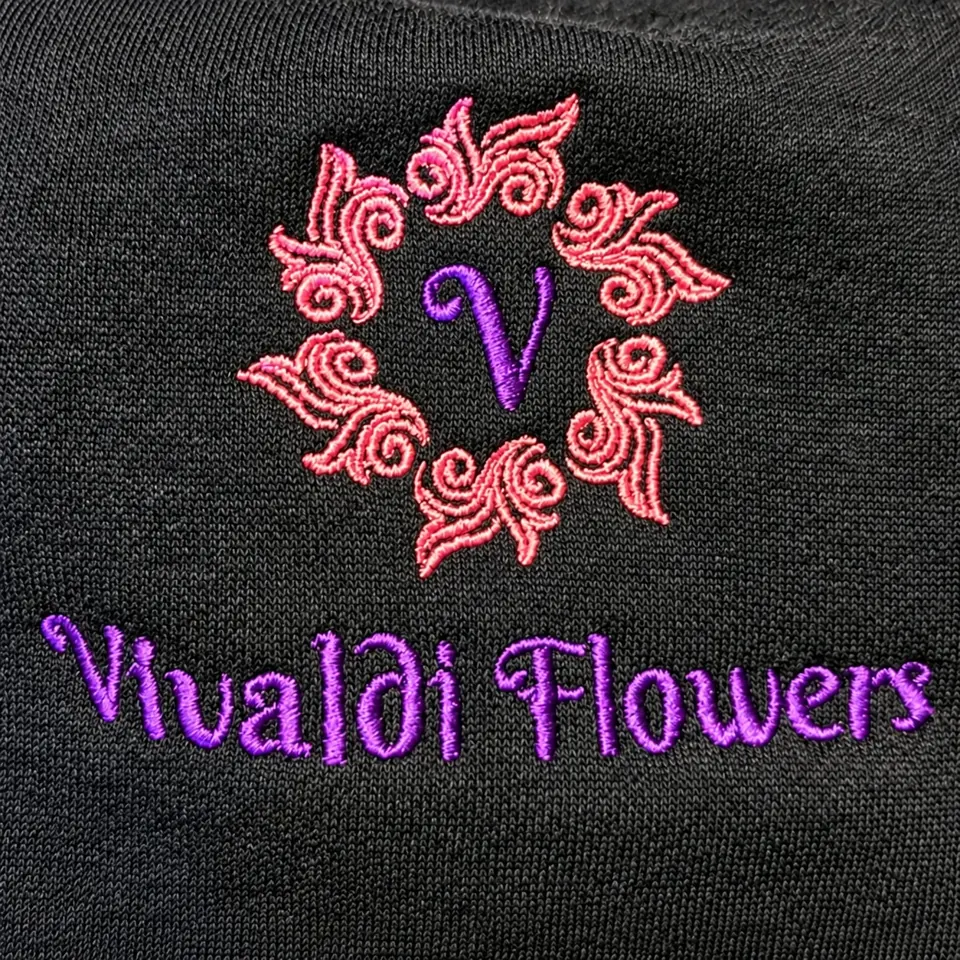
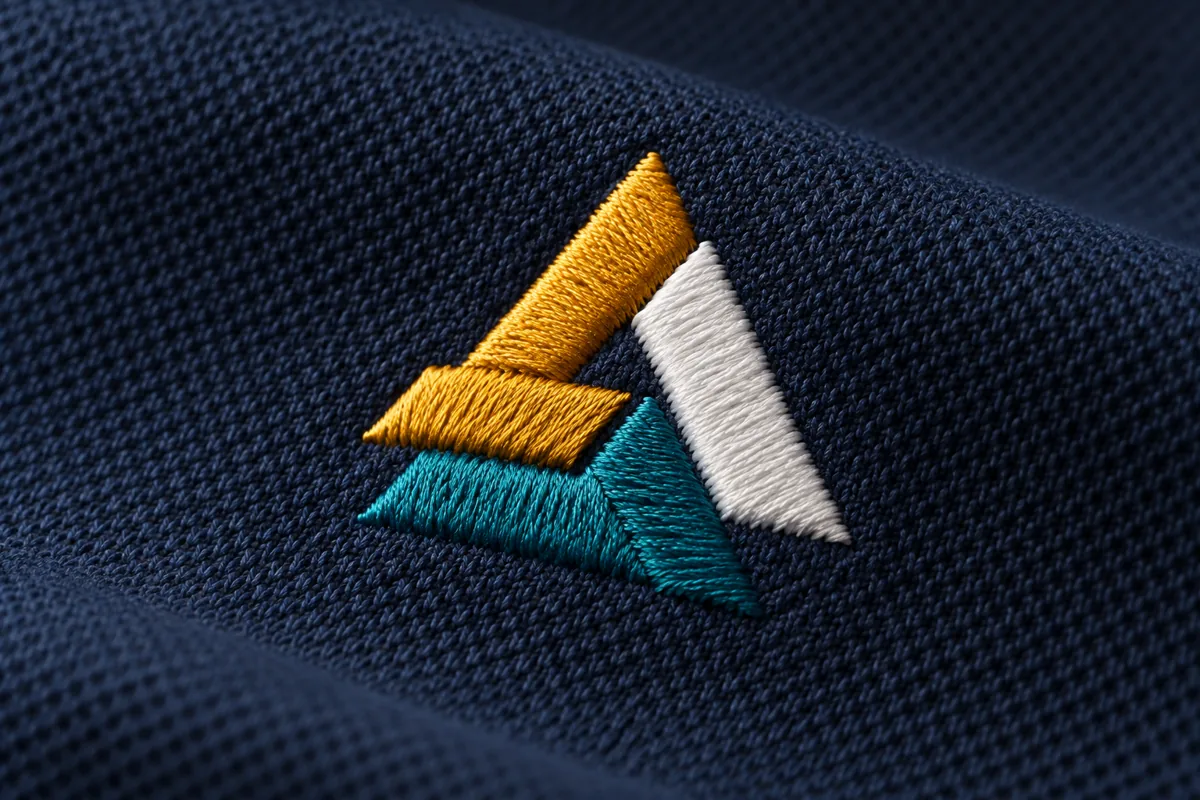
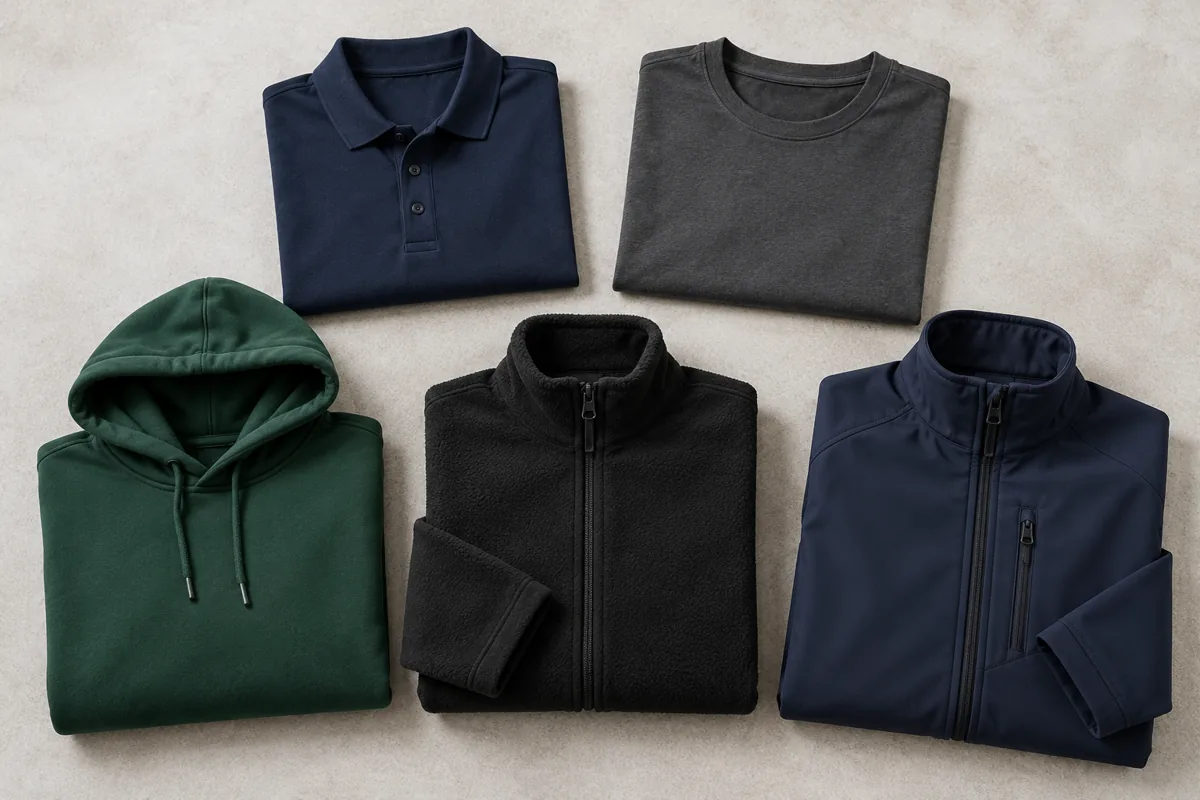
A stitched logo creates a raised, textured finish. It is often useful for compact company marks on suitable polos, fleeces, hoodies and jackets. The fabric surface, construction and access influence the preparation and positioning.
Embroidery pricing considers logo size and stitch count as well as garment quantity and positions. A digitised stitch file is needed: the standard one-time fee is £25 + VAT, with setup included where a selected bundle expressly states it. The unchanged file can be reused for repeat orders.

Where printing is a useful option
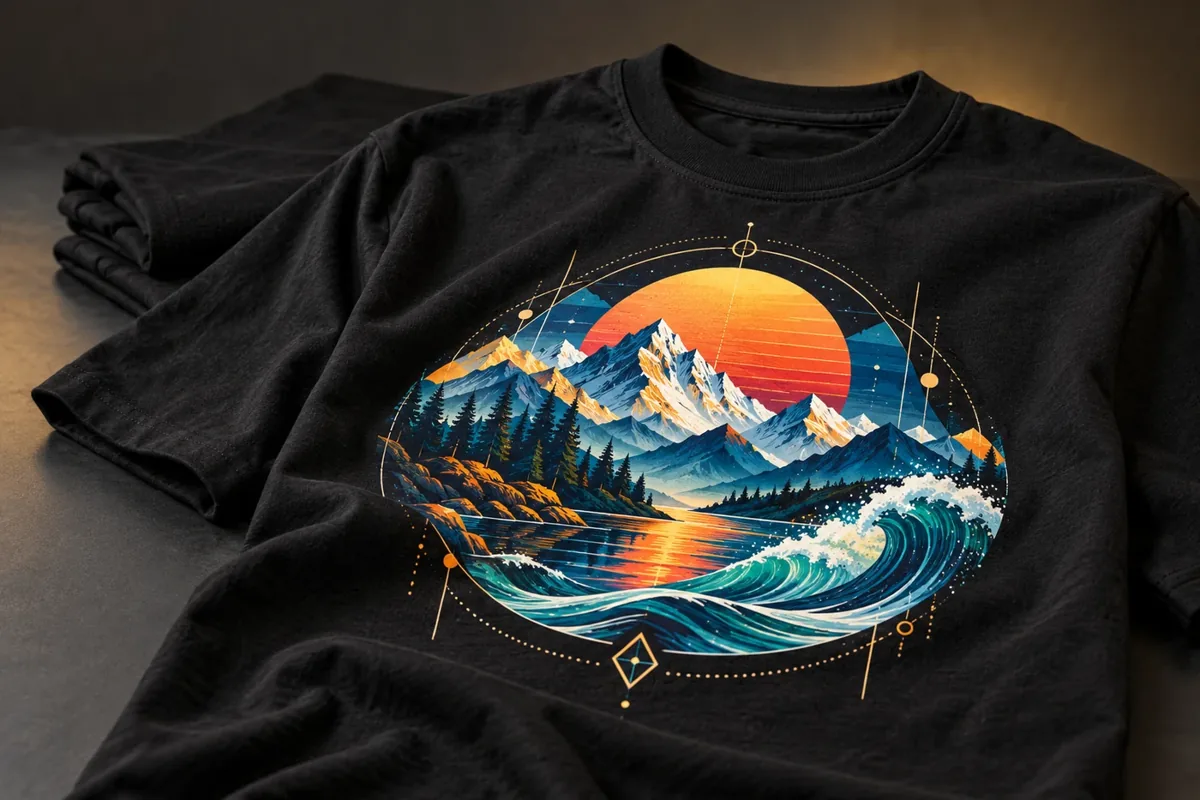
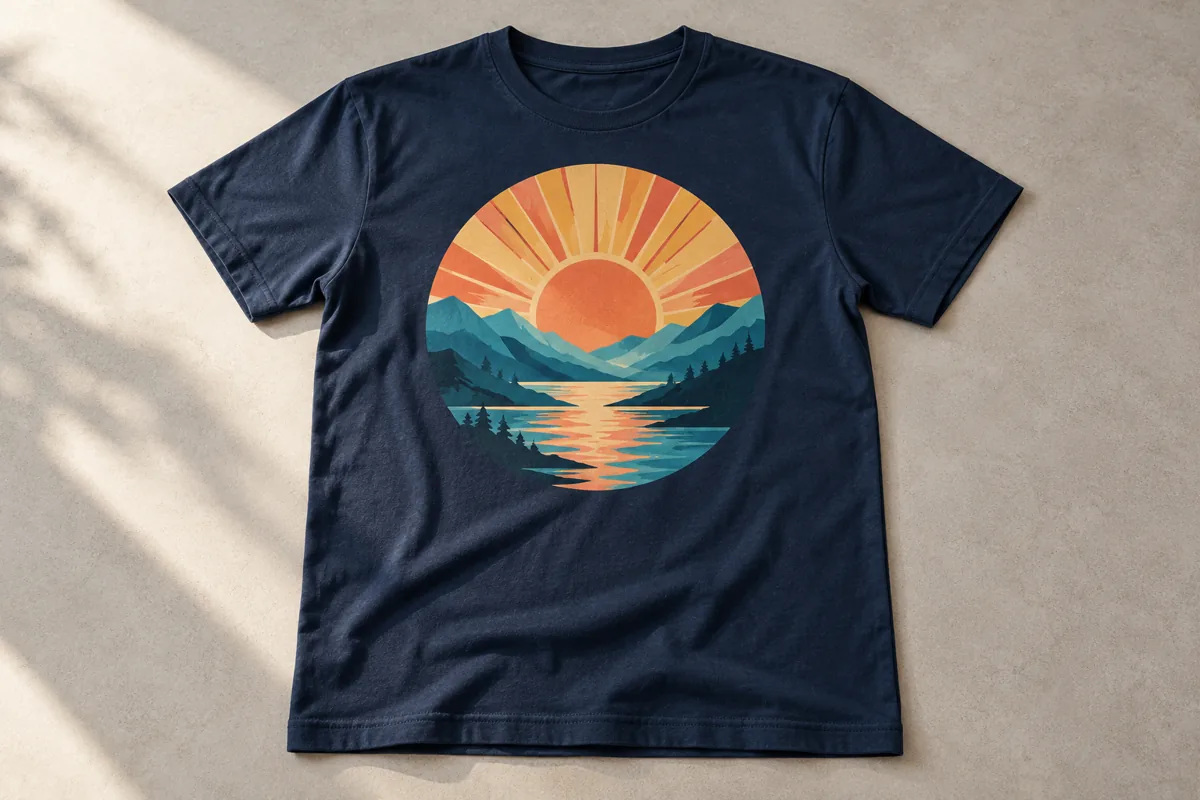
Garment printing can suit larger designs, colourful illustrations, lettering and information across the back. DTF is one option for detailed artwork on compatible garments; suitable vinyl can be useful for lettering and numbers. Standard sublimation is assessed separately for appropriate light polyester clothing.
Print coverage affects feel and flexibility. A large solid graphic may feel different from the surrounding fabric, while a small logo uses less area. Heat, coatings and fabric behaviour also matter, so the exact garment should be assessed rather than selected only from a photograph.
Use both methods where they earn their place
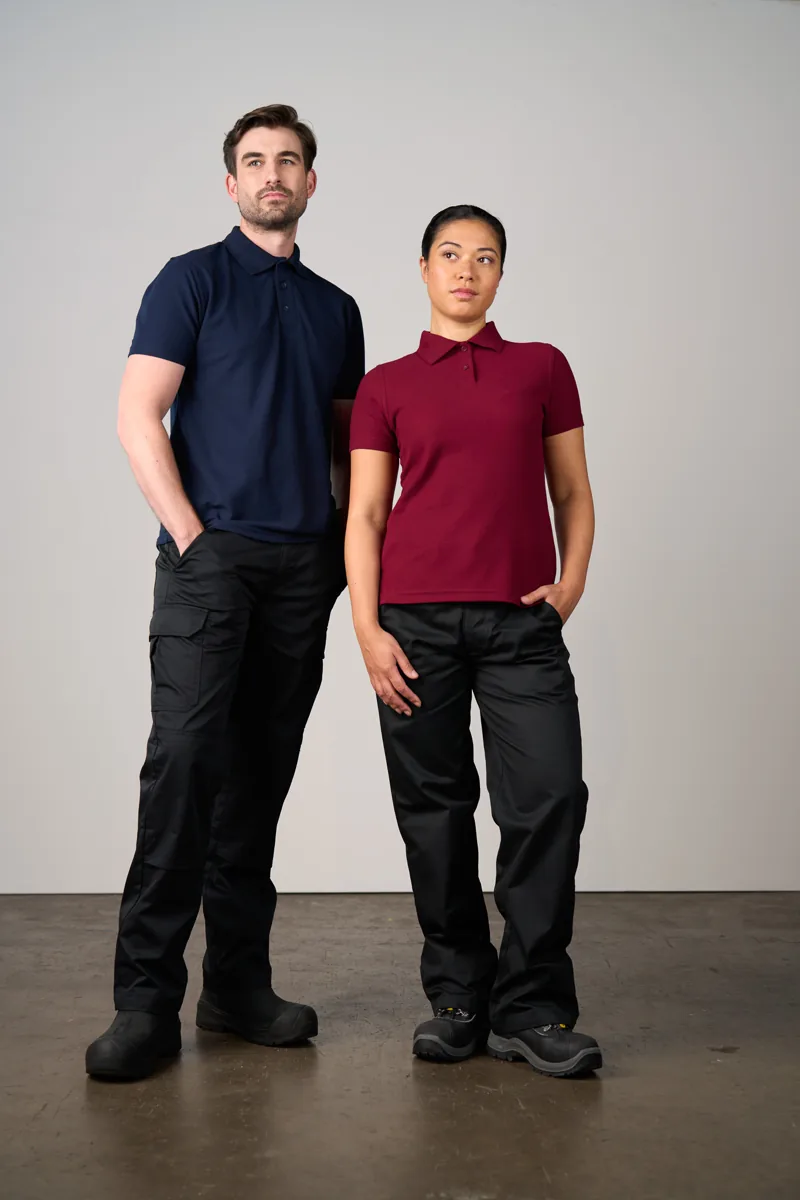
You can plan embroidered polos for customer meetings and printed T-shirts for a wider team or event. Another option is a stitched chest logo and a larger printed back on a suitable layer. Keep the visual identity consistent while allowing the method to serve each position.
There is no universal winner on price or durability. The design, garment, decoration specification and care routine determine the practical result. Share your use case and ask us to compare suitable options. Your quotation should describe each garment and position, so you can approve the complete finished specification.
Compare the finish for your brief
| Your priority | Embroidery | Garment printing |
|---|---|---|
| Compact company logo | Textured finish on suitable fabrics; assess small detail. | Useful for colour and detail; check final size. |
| Large full-colour graphic | Stitch count and fabric can limit practicality. | DTF may suit detailed graphics on compatible garments. |
| Preparation | Digitised stitch file for the intended size and fabric. | Suitable artwork, transfer and application for the garment. |
| Care | Follow the garment label and supplied guidance. | Follow the garment label and supplied print guidance. |
Explore clothing for your enquiry
These links open garment information from our existing catalogue. Plain garment prices exclude branding; your quotation confirms decoration, setup, VAT and delivery where applicable.
A quotation built around your job. Costs and timing depend on the garments, artwork, quantities and positions. Send your required date and we will confirm what is possible before production.
Your questions, answered
Is embroidery always better than printing?
No. Embroidery suits some logos and fabrics, while printing can be more suitable for larger graphics or full-colour detail. Choose for the actual design and garment.
Which method lasts longer?
There is no useful universal lifespan promise. The garment, decoration specification, use and care routine matter. Follow the supplied guidance for your finished clothing.
Can you quote both options?
Send your logo, garment choice, quantities and positions. We can discuss suitable finishes and compare the options that work for that brief.
Our embroidery service · Our garment printing service · More workwear FAQs
Guide updated 11 October 2026 · Sandycroft Workwear Ltd